
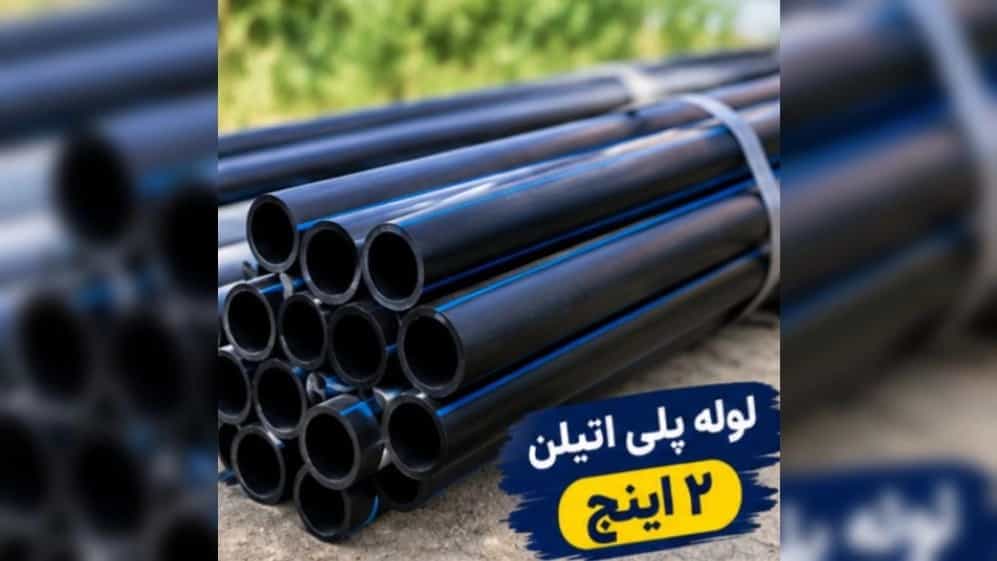
In choosing a pipe for a garden, agricultural land, water supply network or water transmission, only paying attention to the price is not enough. Pipe diameter, water flow rate, working pressure, quality of raw materials and connection method all play a role in the final performance of the network. The wrong choice can cause a pressure drop, increase the installation cost or the need to replace the equipment early.
2 inch polyethylene pipe is one of the most widely used sizes in water transmission and distribution projects, which is usually known with a nominal outer diameter of 63 mm. This product is available in different models in terms of wall thickness, raw materials and pressure category; Therefore, two pipes of the same size do not necessarily have the same capacity to pass water or bear the same pressure.
In this article, instead of focusing only on introducing the product, we will examine the 2-inch polyethylene pipe from the perspective of choosing the right one and reducing project costs. By knowing the technical specifications, applications, pricing factors and purchase tips, you can choose an option that suits your consumption conditions.
What is the exact size of a 2 inch polyethylene pipe?
In common market nomenclature, 2-inch polyethylene pipe usually refers to a pipe with a nominal outer diameter of 63 mm. However, for accurate ordering, it is better to state the size in millimeters to reduce the possibility of making a mistake in choosing the product.
The important point is that the outer diameter is different from the inner diameter. The outer diameter is important for identifying the pipe size and matching it with many fittings, but the inner diameter depends on the wall thickness. As the thickness of the wall increases, the inner space of the pipe will decrease.
The main specifications you should check when buying are:
- Nominal outer diameter: usually 63 mm for 2 inch market size.
- Materials: such as PE80 or PE100 grades, according to the product specifications.
- Wall thickness: depends on the dimensional class and nominal pressure.
- Nominal pressure: should be coordinated with the design and operating conditions of the network
- Production standard: Suitable for the type of application, such as the transfer of water under pressure.
- Supply method: Depending on the product and manufacturer, it may be supplied as coils or branches.
So when inquiring about 2-inch polyethylene pipe, don't be limited only by the name of the size. Specify the nominal diameter, thickness, pressure category and type of raw materials.
The most important applications of 2 inch polyethylene pipe
The appropriate use of this pipe depends on the capacity of the network and the technical specifications of the product. 63 mm size is used in some projects to transfer water between the source, pump, reservoir and sub-lines; But the final choice should be made based on the actual needs of the network.
1. Water transfer in agricultural lands
In many agricultural projects, water must be transported from a well, reservoir or pumping station to different parts of the land. 2 inch polyethylene pipe can be used in parts of such a network; Provided that the required flow rate and working pressure are compatible with the specifications of the pipe.
The land area alone is not enough to make the right choice. The number of sub-lines, the type of irrigation system, the length of the route and the amount of water required per hour should also be checked.
2. Irrigation of gardens and greenhouses
In gardens and greenhouses, the design of the network depends on the type of cultivation and irrigation method. In some projects, 2-inch polyethylene pipes are used to transport water to different parts of the network, and after that, smaller lines deliver water to consumption points.
If several sections are irrigated at the same time, the total flow rate and pressure drop of the path should be calculated. Otherwise, it may be difficult to supply water to distant places.
3. Water distribution lines
This size can be considered in some water distribution lines for small and medium projects. Its suitability depends on network pressure, path length, height difference and number of branches. In sensitive or extensive projects, hydraulic design should be done before selecting the diameter.
4. Some industrial applications
Polyethylene pipe is used in some industrial applications to transport fluids compatible with the type of pipe. In this situation, the type of fluid, working temperature, pressure and chemical compatibility of the materials should be checked. It cannot be considered suitable for any type of fluid just because the product is polyethylene.
How to choose the right working pressure?
One of the common mistakes when buying a 2-inch polyethylene pipe is to choose the product only based on its diameter. The diameter determines the size group the pipe falls into, but the pressure tolerance depends on factors such as raw materials, wall thickness, and standard product specifications.
Check the following to select the appropriate pressure range:
Normal working pressure: Specify what pressure the network works under normal conditions.
Momentary pressure increase: Turning the pump on and off or suddenly closing the valve can cause transient pressure. These conditions must be considered in the design.
Wall thickness and SDR: The SDR ratio is obtained by dividing the nominal outer diameter by the nominal wall thickness. For the same diameter, a lower SDR usually means a thicker wall; But the final choice should be made based on the product's standards and specifications.
Type of raw material: Material grade is effective in the mechanical characteristics and allowable pressure of the pipe. Simply entering the name PE80 or PE100 is not a substitute for checking the technical table and product documents.
Installation conditions and temperature: Fluid temperature, environmental conditions and installation method can affect the performance of the pipe.
As a result, before ordering the 2-inch polyethylene pipe, determine the required pressure from the network design. Avoid choosing a workload based on guesswork or simply experience from another project.
How is the price of 2 inch polyethylene pipe determined?
The price of 2 inch polyethylene pipe depends on the product specifications and order conditions and may change at different times. Therefore, announcing a fixed price without specifying the thickness, nominal pressure, order quantity and delivery terms can be misleading.
Quality of raw materials
The type of raw materials and production quality affect the mechanical properties of the pipe. When comparing the offers, check the technical specifications and relevant documents and do not consider the lower price alone as a sign of a better purchase.
Thickness and nominal pressure
Tubes that have the same outer diameter may have different thicknesses. Greater thickness usually increases material consumption and can increase the price. On the other hand, choosing a pipe with a nominal pressure disproportionate to the needs of the project is also not a good decision.
Purchase amount and size
The price of the order may vary according to the quantity required, the number of coils or branches, and the terms of sale. For a detailed inquiry, state the total size and type of packaging.
Transportation and delivery location
Shipping cost depends on the distance, order volume and loading and unloading conditions. It is better to ask when you receive the price if the stated amount is only related to the pipe or if it includes the transportation to the project site.
Connections and installation cost
For a realistic budget estimate, don't just calculate the price of the pipe. Connections, valves, conversion parts, installation equipment and the cost of the executive may also contribute to the final cost.
To get a price according to your specifications, visit Zamzam Pipe website or call 09120596640. When inquiring, state the 63 mm size, the pressure category and the required size so that the received offer is more accurate.
The difference between 2 inch polyethylene pipe and smaller and larger sizes
Choosing the right diameter does not mean that you should always buy the bigger size. Too small diameter may cause pressure drop and flow limitation; On the other hand, choosing a larger size than needed can also increase the cost of providing pipes and fittings.
Smaller pipes are usually checked in branch lines or lower flow sections. 2-inch polyethylene pipe can be suitable for routes that require more capacity, but flow, path length and pressure should still be checked. Larger sizes may also be suitable for transmission lines with higher water volume.
To compare sizes, answer these questions:
- How much water should be transferred per hour?
- What is the length of the route and the difference in height?
- How many branches are connected to the network?
- How much pressure drop is acceptable?
- What is the pressure of the pump and the equipment connected to the network?
If the answers to these questions are not clear, choosing Qatar based solely on the advice of others can lead to additional costs.
Guide to buying 2 inch polyethylene pipe
Before placing an order, a few simple checks can avoid common mistakes.
1. Specify the exact size. When calling, say you want 2 inch or 63 mm polyethylene pipe and ask the seller to confirm the exact specifications of the product.
2. Specify the pressure category. The required pressure should be determined based on the network design; rather than simply choosing the most expensive or the cheapest model.
3. Get technical specifications. Check outer diameter, wall thickness, raw material grade and production standard.
4. Coordinate the fittings. Make sure the fittings are compatible with the diameter and type of pipe. The type of connection should also be appropriate to the network design and implementation conditions.
5. Ask for the delivery terms. Specify the size, type of packaging, delivery time, shipping cost and drop off location before finalizing the order.
6. Compare the prices of products with the same specifications. Comparing the prices of two pipes with different thickness or pressure category does not give you an accurate picture of the purchase value.
To view information and track purchases, visit Zamzam Pipe. You can also call number 09120596640 and ask about your project details.
Installation and maintenance tips
The proper performance of the pipe is not only dependent on the quality of construction; Transportation, storage and installation are also important. When moving, avoid pulling the tube on rough surfaces, giving strong impact and contact with sharp objects.
Before installation, check the route and prepare the substrate according to the implementation instructions. The connection method should be chosen according to the type of pipes and connections, and the people who implement it should follow the technical instructions.
In buried networks, soil condition, substrate, burial depth and surface loads should be considered in the design. After the installation, testing and commissioning of the network must be done according to the project's standards and guidelines. Do not determine the test pressure without considering the specifications of all network components.
If the pipe is used for water supply, check the compatibility of the product with the intended application. For fluids other than water, the chemical resistance and temperature limits of the product must be known.
Why should we inquire about buying Zamzam Pipe?
In buying pipes, getting the price is only part of the decision making process. Being clear about the size, pressure category, meterage, type of application and delivery conditions will help you compare the received offers more accurately and avoid ordering inappropriate products.
To check 2 inch polyethylene pipe purchase options, enter Zamzam Pipe official website. If you prefer to follow up directly, call 09120596640.
It is recommended to have the required size, desired working pressure, delivery location and application of the pipe ready before the call. With this information, you can ask more detailed questions about the technical specifications and cost of the order.
summary
2 inch polyethylene pipe, commonly known in the market with a nominal outer diameter of 63 mm, is used in some water transmission networks, agricultural irrigation, gardens and compatible industrial applications. However, the correct choice is not limited to the outer diameter; Wall thickness, nominal pressure, grade of raw materials, path length and required flow should also be checked.
For a better purchase, compare the technical specifications of the products, consider the cost of shipping and connections, and make sure that the pipe is compatible with the project's needs before placing an order.
To inquire about the price and check the purchase of 2 inch polyethylene pipe, visit zamzampipe.ir or call 09120596640 call.
Frequently asked questions about 2 inch polyethylene pipe
1. How many millimeters is a 2-inch polyethylene pipe?
2 inch polyethylene pipe in common market nomenclature usually refers to the nominal outer diameter of 63 mm. Its inner diameter changes according to the thickness of the wall; Therefore, for an accurate purchase, check the technical specifications of the product.
2. The price of 2 inch polyethylene pipe depends on what factors?
The price depends on the raw material grade, wall thickness, nominal pressure, order quantity, packaging type and shipping cost. In order to receive a comparable price, when inquiring about the size, state the pressure category and the required size.
3. Is 2 inch polyethylene pipe suitable for agricultural irrigation?
This size can be used in parts of the agricultural irrigation network or water transfer; But its suitability depends on the required flow rate, path length, height difference, working pressure and the number of branches. Before buying, check the specifications of the network and choose the size based on your actual needs.
To get the price and guidance on buying 2 inch polyethylene pipe, visit Zamzam Pipe website or call 09120596640 call.